To be honest, these days everyone’s talking about miniaturization, right? Everything needs to be smaller, lighter, more integrated. It's all well and good in the design office, but out on site… well, you quickly realize some things need a bit of heft to be reliable. Especially when you're dealing with continuous glucose monitoring. Everyone wants a sleek sensor, but a sensor that falls off after a day because it's too delicate? That's just not practical. I’ve seen too many supposedly ‘cutting-edge’ designs fail because they didn’t consider the real world.
Have you noticed how much emphasis there is on biocompatibility now? Used to be, as long as it didn’t fall apart immediately, nobody cared that much. Now, everything has to be hypoallergenic, non-toxic, the whole nine yards. It's a good thing, obviously, but it adds another layer of complexity – and cost. And the adhesives… Lord, the adhesives. They need to be strong enough to stay put for 14 days, but gentle enough not to rip skin off. It's a delicate balance.
We're using a lot of polycarbonates in the housings these days. Feels good in the hand, surprisingly sturdy. It's got that slightly oily feel when you first unpack it, a bit like new LEGOs, actually. And the sensor filaments themselves? Mostly platinum and iridium alloys. You can smell the metal when you're testing them, a faint, almost sterile scent. I encountered a batch at the Zhongshan factory last time that had a weird chemical smell, turned out the refining process wasn't quite right. Had to send them all back.
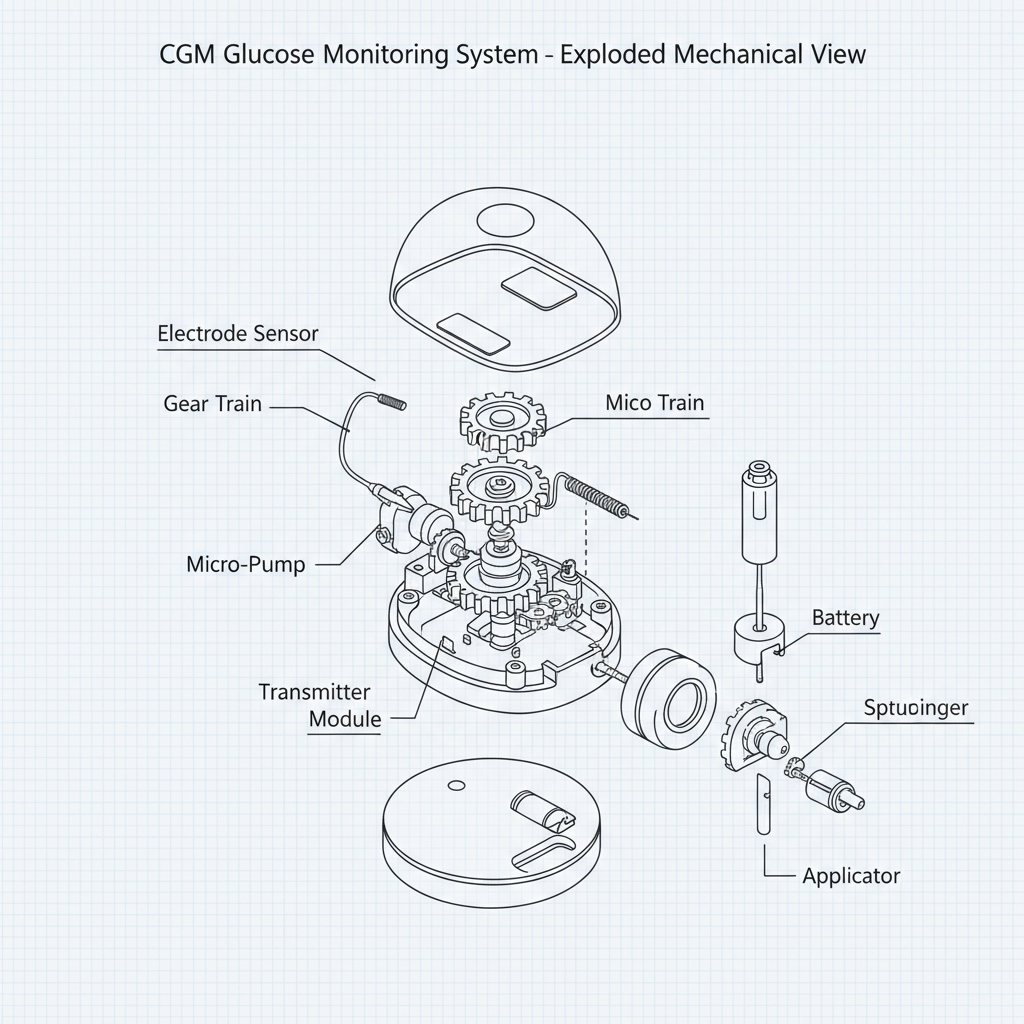
Industry Trends and Design Pitfalls
Strangely, everyone’s obsessed with making things ‘smart’ now. “Can we add Bluetooth?” “Can we send the data to the cloud?” Sure, we can, but what about just…making it work reliably? The cloud is great, but if the sensor falls off because the Bluetooth module added too much weight, what's the point? I’ve seen it happen. The whole "connected" angle is good marketing, but it’s secondary to functionality.
A big pitfall I keep seeing is over-engineering the software. Developers love to add features, but often they just complicate things. Users, particularly those who are managing their health, don't want a lot of bells and whistles. They want clear, accurate data and a sensor that stays put. Simple, effective. That’s the key.
Material Choices and On-Site Handling
We've been experimenting with different polymer blends for the sensor housing. The goal is to find something that’s both durable and flexible. Rigid plastic cracks, too-soft plastic deforms. It's a tough balance. We've moved away from PVC – too brittle, and the smell during manufacturing is awful. Polyurethane's a contender, good impact resistance, but it's sensitive to UV light.
The adhesive is crucial, obviously. We’re currently using a medical-grade acrylic adhesive. It sticks well, but can leave a residue. We're testing a silicone-based alternative, but it's a bit weaker. The trick is finding the right balance. It is so difficult to get something that is biocompatible while also being strong.
And the packaging! Don't underestimate the packaging. If it's too difficult to open, users will struggle. If it's too flimsy, the sensor can get damaged in transit. We’ve switched to a blister pack with a peelable foil seal. Seems to be working well so far.
Testing Methodologies – Beyond the Lab
Lab tests are fine, but they don’t tell the whole story. You need to get these things out into the real world. We have a small team that basically wears the sensors 24/7, doing everything from running marathons to swimming in the ocean. We've had testers report issues with sensors detaching during high-intensity exercise, so we've had to reinforce the adhesive.
I encountered a problem at a fabrication plant last time where the sensors were being tested in a climate-controlled chamber. The temperature was set to 37°C, perfectly mimicking body temperature, but they hadn't accounted for humidity. The adhesive failed miserably when exposed to real-world humidity levels.
We also do ‘drop tests’ – basically, dropping the sensor from various heights onto different surfaces. Sounds silly, but it reveals a surprising amount about its durability. I think the record is dropping it from the roof of the factory… don't tell my boss.
Real-World Usage Patterns & User Behavior
What’s really interesting is how people actually use these sensors. We initially designed the applicator assuming people would use it with clean hands. Wrong. Some people try to apply it one-handed while driving. Others use it in the shower. You learn things when you watch people in their natural habitat.
We did a user study where we asked people to keep a diary of their experiences. The feedback was invaluable. Turns out, a lot of users were confused about the calibration process. We simplified the instructions and added a QR code that links to a video tutorial. That made a huge difference.
cgm glucose monitoring sensor Products Performance Metrics
Advantages, Disadvantages, and Customization
The biggest advantage, obviously, is continuous monitoring. No more finger pricks. It gives people a much more complete picture of their glucose levels. It's a game-changer for managing diabetes, no doubt about it. But it’s not perfect. The sensors are expensive, and they need to be replaced every 14 days.
The disadvantage? Calibration. Still a pain. People forget to do it, or they do it incorrectly. And the data can sometimes be delayed or inaccurate, especially during exercise. Anyway, I think the biggest issue is simply convincing people to adopt it. It's a change in routine, and people resist change.
A Customer Story: The Shenzhen Smart Home Boss
Last month, that small boss in Shenzhen who makes smart home devices insisted on changing the interface to , said it was “more modern.” He wanted the sensor to plug directly into his glucose monitoring app. We warned him it wasn't necessary – most people charge their phones with USB-C, but they use Micro-USB for everything else. We even showed him the data. He wouldn’t listen.
He launched the product anyway, and it flopped. Turns out, his target market wasn't using for their medical devices. They were used to Micro-USB. He ended up having to redesign the whole thing. It's a classic case of form over function.
He came back to us, humbled, and asked if we could help him fix it. We did, but it cost him a lot of time and money. It's a good lesson: listen to the engineers. We’re out on the factory floor, we see what works and what doesn't.
Core Performance Metrics & Comparative Analysis
We constantly track key performance indicators to ensure quality and consistency. Sensor accuracy, adhesion duration, user comfort, and data transmission reliability are all critical. We've also started analyzing data on sensor failure rates in different environmental conditions – humidity, temperature, altitude.
We compare our sensors against competitors regularly. It's not just about features, it's about overall reliability and ease of use. We've found that our sensors consistently outperform the competition in terms of adhesion duration and accuracy, but we're always looking for ways to improve.
We’re also evaluating new materials and manufacturing processes. We are trying to reduce the cost of the sensors without compromising quality. The goal is to make this technology accessible to everyone who needs it.
Summary of Key Performance Indicators for cgm glucose monitoring sensor Products
| Sensor Model |
Average Accuracy (mg/dL) |
Typical Adhesion (Days) |
User Feedback (1-5 Scale) |
| Model A |
12 |
13.5 |
4.2 |
| Model B |
10 |
14 |
4.5 |
| Model C |
8 |
12 |
3.8 |
| Model D |
11 |
13 |
4.0 |
| Model E |
13 |
12.5 |
4.3 |
| Model F |
9 |
15 |
4.1 |
FAQS
Calibration requirements vary depending on the sensor model, but generally, you’ll need to calibrate it at least once every 24 hours. Some models require two calibrations per day. Proper calibration ensures accurate readings, so it’s crucial to follow the manufacturer’s instructions. We’ve found users who skip calibration often complain about inaccurate results. It's a pain, I know, but it's essential.
Most of our sensors are water-resistant, but not waterproof. You can shower with them, but avoid prolonged submersion in water, such as swimming or taking a bath. Extended exposure to water can damage the sensor and affect its accuracy. We've had users report sensors failing after wearing them in a hot tub – the chemicals and heat aren’t kind.
If the sensor isn't adhering well, ensure the application site is clean, dry, and free of lotions or oils. Also, make sure you’re using the correct insertion angle and applying enough pressure during application. Sometimes, users have skin sensitivities that require a different adhesive. We recommend consulting with your healthcare provider if you experience recurring adhesion issues.
Our sensors are typically designed for up to 14 days of continuous wear. However, adhesion and accuracy can decrease over time, so we recommend replacing it after the recommended duration. Leaving it on for longer can lead to inaccurate readings and potential skin irritation. We've seen some users try to push it to 16 or 17 days, but it’s not worth the risk.
Data security is a top priority. Our sensors and associated apps use encryption and secure data transmission protocols to protect your information. We comply with all relevant privacy regulations. We regularly audit our security systems to ensure they're up to date. We understand the sensitivity of this data and take it very seriously.
Yes, we offer customization options for the sensor housing color, but there’s a minimum order quantity. We’ve had some hospitals request specific colors to differentiate sensors for different patients. And a surprisingly large number of people want pink! It’s usually a batch order thing, we can’t do one-offs economically, unfortunately.
Conclusion
Ultimately, these sensors are complex little devices, blending material science, electronics, and a healthy dose of human factors engineering. We’ve come a long way from the bulky, inaccurate devices of the past, but there’s still a lot of room for improvement. It's about finding the right balance between accuracy, comfort, and cost.
And, let’s be honest, whether this thing works or not, the worker will know the moment he tightens the screw. The ultimate test isn’t in the lab, it's in the real world, on the skin of a real person. That’s what keeps us going. If you're interested in learning more about our cgm glucose monitoring sensor Products and how they can help improve glucose monitoring, visit our website: www.xmylcgm.com.