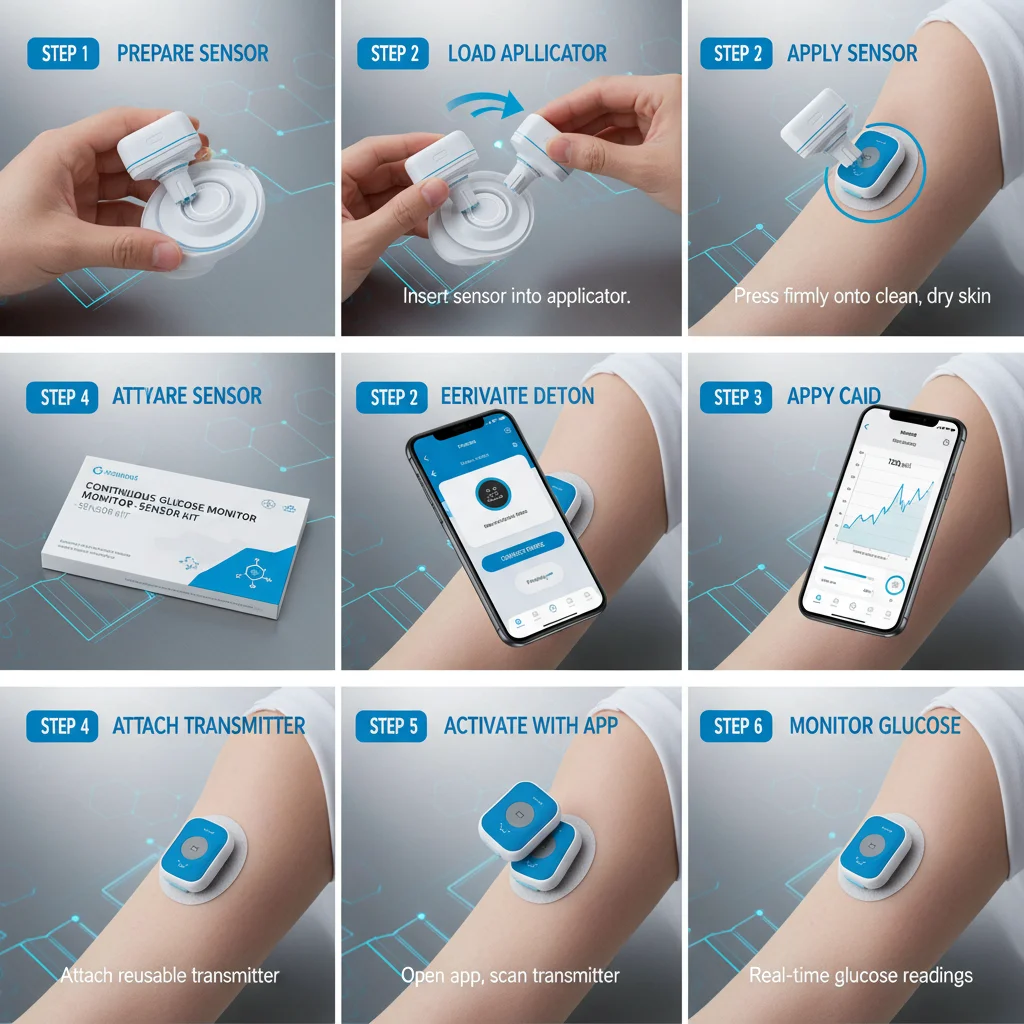
The global landscape of diabetes management has undergone a paradigm shift with the advent of contineous glucose monitor sensor Products. Unlike traditional finger-stick methods that provide only a snapshot of glucose levels, continuous monitoring offers a dynamic, real-time view of glycemic trends, allowing patients and healthcare providers to make more informed decisions regarding insulin dosing and lifestyle adjustments.
Integrating high-precision sensing technology with user-centric design, modern contineous glucose monitor sensor Products address the critical need for stability, accuracy, and patient comfort. By reducing the friction associated with daily monitoring, these devices empower individuals to maintain tighter glycemic control, thereby significantly lowering the risk of long-term complications associated with hyperglycemia and hypoglycemia.
Understanding the technical evolution of these sensors—from electrode architecture to hypoallergenic adhesives—is essential for clinics and patients seeking to optimize therapeutic outcomes. The focus has shifted not only toward data accuracy but also toward the biological interface, ensuring that the device remains unobtrusive and skin-friendly for extended wear.

Global Relevance of Continuous Glucose Monitoring
The prevalence of diabetes continues to rise globally, creating an urgent demand for more efficient diagnostic tools. According to international health standards and ISO guidelines for medical device safety, the shift toward contineous glucose monitor sensor Products is driven by the need to reduce the burden of frequent invasive testing while improving the accuracy of glucose trend analysis in diverse populations.
Current challenges in the industry often revolve around "sensor fatigue" and skin irritation, which lead to poor patient adherence. By implementing advanced materials and ultra-thin architectures, manufacturers are now able to bridge the gap between clinical-grade precision and the daily comfort required for long-term domestic use, ensuring that monitoring is a seamless part of the patient's life rather than a disruption.
Defining the GS-3O Sensor Technology
At its core, the GS-3O represents a sophisticated leap in contineous glucose monitor sensor Products. It is a portable, disposable sensor specifically engineered for high-precision continuous glucose measurement. By integrating advanced two-electrode technology, the GS-3O provides a stable electrical interface that converts interstitial fluid glucose levels into reliable, real-time digital data.
Unlike traditional sensors that may be bulky or cause significant tissue displacement, the GS-3O focuses on a minimal physical footprint. With dimensions of 29mm x 21mm x 5.5mm and a net weight of only 2.0g, it is designed to be nearly imperceptible to the wearer, which is critical for maintaining the psychological well-being of patients managing chronic conditions.
Beyond the electronics, the device is defined by its commitment to sterility and safety. Each sensor is housed in a disposable sterile seal with jelly tear strips for rapid deployment, ensuring that the insertion process is hygienic and efficient, reducing the risk of infection and streamlining the application process for both medical professionals and patients.
Core Components for Enhanced Patient Comfort
The primary innovation within these contineous glucose monitor sensor Products is the utilization of hypoallergenic materials. The GS-3O employs breathable, non-allergenic medical adhesive tape, which is specifically selected to prevent the common issue of contact dermatitis and skin irritation often associated with prolonged wear of medical adhesives.
Central to the device's efficacy is the Two Electrode Technology. This ultra-thin electrode architecture not only enhances the sensing accuracy by optimizing the electrochemical reaction surface but also significantly reduces the physical trauma during insertion. This allows the sensor to maintain a high signal-to-noise ratio while minimizing the biological response of the surrounding tissue.
Furthermore, the logistical design of the GS-3O enhances its practicality. By optimizing the chemistry for room-temperature stability, it eliminates the need for complex cold-chain logistics. This makes these contineous glucose monitor sensor Products more accessible for clinics in remote areas and easier for patients to store at home without compromising the sensor's lifespan or accuracy.
Performance Metrics and Wound Area Impact
When evaluating the efficacy of contineous glucose monitor sensor Products, the "Wound Area Impact" is a critical metric. Standard sensors often cause a baseline level of tissue displacement that can lead to slower healing and increased discomfort. The GS-3O, however, reduces the wound area to less than 90% compared to its competitors, facilitating faster skin recovery and a more painless experience.
This reduction in trauma is a direct result of the refined electrode profile. By minimizing the insertion diameter and depth without sacrificing the electrochemical surface area, the GS-3O achieves a superior balance between medical-grade performance and patient-centric comfort, directly impacting the overall compliance rate of the user.
Comparative Performance of Glucose Sensor Designs
Real-World Applications in Clinical Settings
In modern clinical environments, contineous glucose monitor sensor Products like the GS-3O are integrated into centralized patient monitoring hubs. This allows healthcare providers to oversee glucose trends across large patient groups in real-time, enabling proactive interventions before a patient reaches a critical hypoglycemic or hyperglycemic state.
Beyond the bedside, these sensors are invaluable in remote patient monitoring (RPM) programs. By utilizing the stability of room-temperature storage and the ease of "jelly tear" deployment, clinics can ship sensors directly to patients, who can then apply them with minimal training, ensuring a continuous stream of data that informs telemedicine consultations and medication adjustments.
Long-Term Value and Patient Compliance
The true value of contineous glucose monitor sensor Products lies in their ability to improve patient compliance. When a device is painful or causes skin irritation, patients are more likely to skip monitoring periods, leading to gaps in data and increased health risks. The GS-3O’s focus on hypoallergenic adhesives and minimal trauma removes these barriers to adherence.
From a psychological perspective, the transition to a nearly invisible, painless sensor restores a sense of dignity and normalcy to the patient. By reducing the "medicalized" feel of their daily routine, the GS-3O fosters a more positive relationship with the treatment process, which is often the most significant hurdle in chronic disease management.
Economically, the removal of the cold-chain requirement provides significant cost savings for healthcare systems. Reducing the energy and infrastructure costs associated with refrigerated transport allows for a more sustainable supply chain, making high-quality continuous monitoring accessible to a broader demographic.
Future Innovations in Glycemic Sensing
The future of contineous glucose monitor sensor Products is moving toward complete automation and digital synchronization. We are seeing a trend toward integrated "Compliance Logs," where sterilization certificates and quality control data are digitally archived, ensuring that every single sensor meets stringent medical diagnostic standards before it reaches the patient.
Digital transformation is also enhancing supply chain efficiency. Automated restocking alerts based on real-time consumption rates of disposable sensors like the GS-3O ensure that clinics never face shortages, while real-time quality alerts notify providers of any storage condition deviations, guaranteeing the integrity of the sensing elements.
As we look ahead, the integration of AI-driven predictive analytics with high-precision hardware will allow these sensors to not only report current levels but predict future glucose swings with greater accuracy. This synergy of material science and data science will redefine the standard of care for glycemic monitoring.
Technical Specification Comparison of GS-3O Sensor
| Feature Metric |
Industry Standard |
GS-3O Performance |
Patient Benefit |
| Wound Area Impact |
100% (Baseline) |
< 90% (Reduced) |
Faster healing/Less pain |
| Skin Compatibility |
Moderate/Irritating |
High/Breathable |
No irritation/Allergy safe |
| Storage Requirement |
Cold Chain Required |
Room Temperature |
Simplified logistics |
| Deployment Speed |
Standard Peel |
Rapid Jelly-Tear |
Effortless application |
| Electrode Tech |
Standard Single/Dual |
Advanced Two-Electrode |
Higher sensing accuracy |
| Patient Compliance |
Lower (Discomfort) |
Higher (Comfort) |
Consistent monitoring |
FAQS
The GS-3O achieves superior comfort through a combination of two-electrode technology with thinner electrodes and the use of low-sensitivity, breathable medical adhesive tape. This design specifically reduces the wound area to less than 90% of competitor products and minimizes skin irritation during prolonged wear.
No, unlike many other glucose monitoring components, the GS-3O sensor is specifically designed for stability at standard room temperature. This simplifies the supply chain and allows patients and clinics to store the products safely without the need for expensive and cumbersome cold-chain infrastructure.
Each GS-3O sensor is individually enclosed in a disposable sterile seal. To ensure the packaging remains uncontaminated until the moment of use, the seals are secured with jelly tear strips, which allow for a quick, clean, and effortless opening process in a clinical or home setting.
Yes, the GS-3O utilizes a breathable and non-allergenic medical adhesive tape. This material was specifically chosen to minimize adverse skin reactions, making it an ideal choice for patients who have previously experienced irritation or allergic reactions to traditional medical adhesives.
The GS-3O is designed for a minimal profile, measuring 29mm in length, 21mm in width, and 5.5mm in height. It is incredibly lightweight, with a net weight of approximately 2.0g (± 0.2g), ensuring that it does not interfere with the user's daily movements.
By utilizing a thinner electrode design, the insertion area is significantly reduced. This results in a wound area that is less than 90% of the size of typical sensors. For the patient, this means less initial pain during insertion and faster biological healing, which directly improves long-term compliance.
Conclusion
The evolution of contineous glucose monitor sensor Products, exemplified by the GS-3O, demonstrates a critical convergence of electrochemical precision and biocompatibility. By prioritizing hypoallergenic materials, ultra-thin electrode architecture, and room-temperature stability, the GS-3O effectively solves the most persistent challenges in diabetes management: patient discomfort and logistical complexity. The result is a system that not only provides medical-grade data but does so in a way that respects the patient's quality of life.
Looking forward, the integration of these advanced sensors into broader digital health ecosystems will further empower patients to take control of their health with confidence. We encourage healthcare providers and distributors to upgrade their monitoring technology to improve patient outcomes and operational efficiency. Visit our website for more information: www.xmylcgm.com