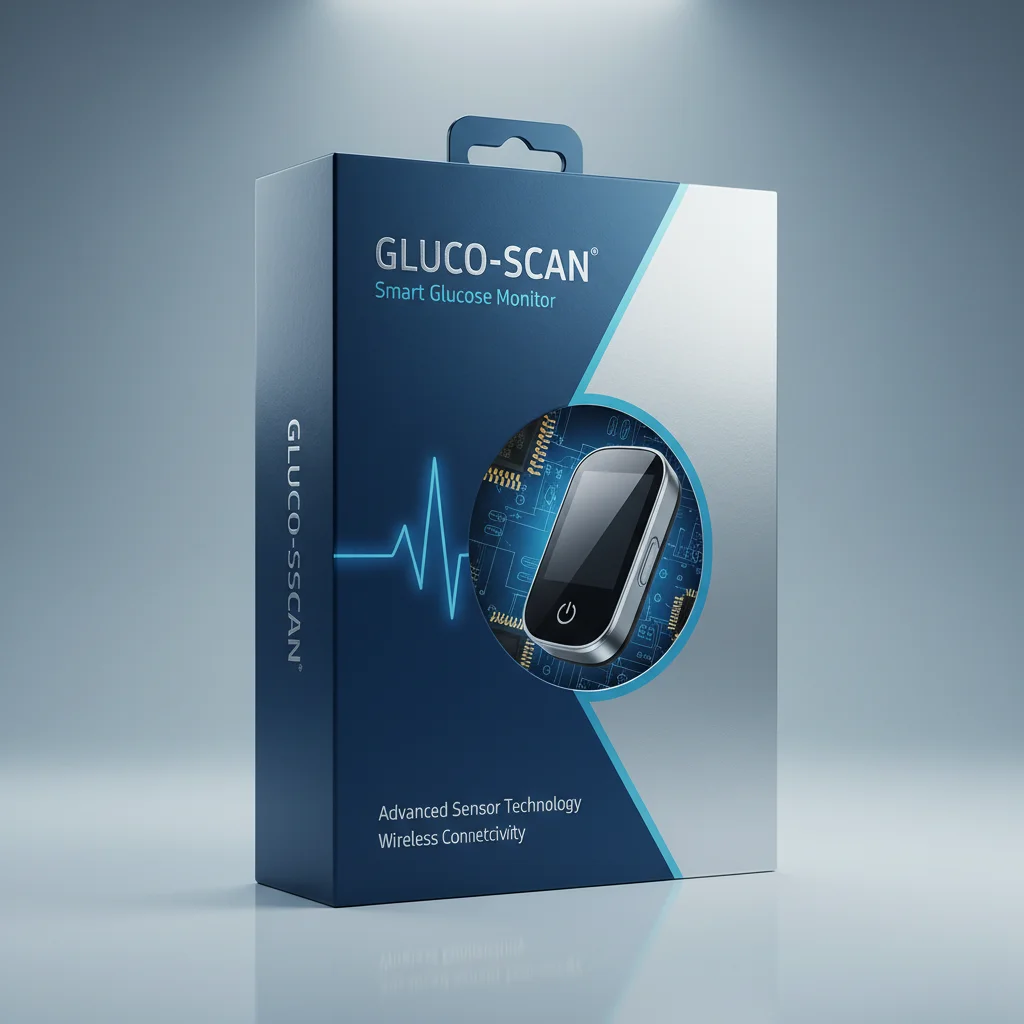

Maintaining precise glycemic control often requires more than just a reliable meter; it demands an ecosystem of tools that reduce the physical and mental burden of daily administration. For patients managing chronic conditions, the intersection of hardware precision and user ergonomics is where treatment adherence is either won or lost.
The challenge in modern diabetes care is not merely the acquisition of data, but the safe and consistent delivery of therapeutic interventions. When patients face dexterity issues or visual impairments, the risk of operational error during needle administration increases, potentially compromising the efficacy of their health management routine.
To address these systemic gaps, the industry is shifting toward "anti-mistake" engineering—tools designed to physically prevent user error. By integrating such precision accessories with glucose monitor sinocare Products, healthcare providers can significantly enhance patient safety and treatment compliance.


Anti-mistake design, often referred to as Poka-Yoke in engineering, focuses on creating a fail-safe mechanism that prevents the incorrect positioning of components. In the context of medical needle aids, this means the device is physically structured so that a needle cannot be inserted backward or misaligned, thereby eliminating the most common source of self-administration injury.
For the AT-3O Portable Needle Aid, this philosophy is applied through a precision-calibrated housing. By ensuring that only the correct orientation allows for operational closure, the tool removes the cognitive load from the patient, making it an essential companion for those using various glucose monitor sinocare Products who may suffer from tremor or fatigue.
The efficacy of a needle aid is determined by its material biocompatibility and dimensional stability. High-grade healthcare materials are selected not only for their resistance to sterilization agents—such as medical-grade alcohol swabs—but also for their ability to maintain structural integrity over a multi-year lifespan. This ensures that the precision calibration required to hold needles securely does not degrade over time.
Dimensionally, the tool must balance portability with grip stability. A compact form factor, such as the 49mm x 57mm x 81mm specifications of the AT-3O, allows for easy transport in a glucose monitoring kit while providing sufficient surface area for a secure grip. This ergonomic approach is critical for patients with reduced dexterity, ensuring that the tool does not slip during the critical moments of administration.
Furthermore, the integration of these tools into a wider therapeutic routine requires a simplified workflow. By reducing the number of steps required to secure a needle and execute the injection, the technical design directly impacts the patient's psychological stress levels, which is a known factor in long-term treatment adherence.
In the medical device industry, the tension between reusability and hygiene is a primary design challenge. While disposable aids reduce the risk of cross-contamination, they increase the long-term cost and environmental impact. A reusable solution must therefore meet stringent international medical device standards to ensure that the materials can withstand repeated cleaning without compromising safety.
The transition from disposable to reusable high-precision aids, like the AT-3O, represents a shift toward sustainable health management, where a certified 3-year shelf life provides a measurable improvement in cost-effectiveness without sacrificing clinical safety.
Compliance monitoring and regular audits are essential to maintain this balance. Manufacturing processes must be audited to ensure that every unit produced meets the "anti-mistake" specifications, as any deviation in the tolerances of a needle aid could lead to operational failure. This rigorous quality assurance is what separates professional-grade accessories from generic consumer alternatives.
Patient accessibility is not a one-size-fits-all metric. Elderly patients often struggle with the "fine motor" tasks associated with small needle components, while patients with visual impairments rely on tactile feedback and intuitive shapes to navigate their treatment. A successful needle aid must provide clear physical cues that guide the user through the process without requiring high-resolution vision.
When we evaluate the impact of professional aids against standard methods, the difference in "User Learning Curve" and "Operational Safety" becomes evident. Tools that utilize intuitive, fail-safe mechanisms allow patients to reach proficiency faster, reducing the reliance on constant caregiver supervision and increasing the patient's sense of autonomy in their health management.
In professional clinical settings, such as endocrinology clinics and long-term care facilities, the use of a needle aid is often integrated into a broader "diabetes education" program. By providing patients with tools like the AT-3O, clinicians can move from simply instructing "how" to inject to providing a tool that "ensures" the injection is performed correctly. This reduces the incidence of subcutaneous tissue trauma caused by improper needle angles.
For home-care settings, the priority shifts to portability and consistency. When a patient uses a standardized aid across different environments, they develop a "muscle memory" that further reduces anxiety. The synergy between these accessories and the monitoring data provided by glucose monitor sinocare Products allows for a holistic approach to chronic disease management where both data and delivery are optimized.
The trajectory of chronic disease management is moving toward an "integrated ecosystem" where hardware, software, and accessories communicate. While current needle aids focus on mechanical safety, the next generation may incorporate smart sensors to verify the depth of administration or track the frequency of use, feeding this data back into a digital health record.
However, the immediate future remains focused on "democratizing" precision. This involves making professional-grade tools accessible to patients in underserved regions where specialized clinical training is unavailable. By building "intelligence" into the physical design of the tool—such as the anti-mistake mechanism—the device itself becomes the teacher.
The challenge for manufacturers will be to maintain the cost-effectiveness of reusable tools while iterating based on real-world clinical data. Continuous feedback loops from patient experience will be the primary driver for evolving the ergonomics of administration aids to better suit a diversifying global patient population.
When choosing between administration aids, healthcare providers must weigh the immediate convenience of disposables against the long-term benefits of reusable precision tools. The decision framework usually centers on three axes: patient dexterity, economic sustainability, and the frequency of administration.
Standard aids often provide moderate safety but require a higher degree of user training to avoid errors. In contrast, professional-grade aids like the AT-3O are designed for intuitive use, which significantly lowers the learning curve and improves the confidence of the patient, particularly those managing their condition independently.
The following comparison illustrates the relative differences in operational and economic outcomes when adopting a reusable anti-mistake aid compared to traditional standard administration methods.
| Evaluation Metric | Standard Disposable Aids | Professional Reusable Aids (AT-3O) | Clinical Impact |
|---|---|---|---|
| Operational Safety | Moderate Risk | High (Anti-Mistake) | Reduced Injury Rate |
| Service Lifespan | Single Use | Long-term (3 Years) | Sustainability Gain |
| Learning Curve | Requires Training | Intuitive / Fast | Increased Autonomy |
| Long-term Cost | High (Recurring) | Low (One-time Investment) | Economic Efficiency |
| Patient Compliance | Variable | Significantly Improved | Better Glycemic Control |
| Maintenance | None (Discard) | Alcohol Swab Cleaning | Hygiene Management |
Anti-mistake design, or error-proofing, refers to physical constraints built into the device that make it impossible to operate incorrectly. In the AT-3O, this means the tool's internal architecture only allows the needle to be seated in the correct orientation. This prevents accidental injuries caused by inserting a needle backward or misaligning it, ensuring that medication or sampling is delivered exactly as intended, regardless of the user's dexterity level.
Yes, provided they are manufactured from healthcare-grade materials. The AT-3O is certified for a 3-year shelf life, meaning its structural integrity and precision calibration are guaranteed for that period under recommended storage conditions. This durability is achieved through the use of high-impact, biocompatible polymers that do not warp or degrade during regular use and cleaning with medical-grade alcohol.
Elderly patients often suffer from limited vision or tremors, making the handling of tiny needle components stressful and risky. The AT-3O features an ergonomic shape and a simplified, intuitive operation that removes the need for high-precision visual alignment. By turning a complex manual task into a guided mechanical process, it reduces the anxiety associated with self-administration and promotes better adherence to daily health plans.
The AT-3O is engineered to be compatible with standard medical needles commonly used in glucose management and therapeutic injections. However, because needle gauges and hub designs can vary slightly between manufacturers, we recommend consulting the technical manual to verify specific gauge compatibility to ensure the most secure fit and maximum operational safety.
To maintain the highest hygiene standards and prolong the device's lifespan, we recommend wiping the exterior surfaces with a medical-grade alcohol swab after each use. Since the device is made from healthcare-grade materials, it is resistant to these agents. Regular cleaning prevents the buildup of residues and ensures that the anti-mistake mechanisms continue to operate smoothly without interference.
These aids are primarily utilized in endocrinology clinics, home-care settings for long-term diabetes management, and skilled nursing facilities. They are particularly valuable in environments where patients are being transitioned from clinical care to self-care, as the tool provides a "safety net" that ensures the patient can maintain the standard of care established by their healthcare provider.
The evolution of chronic disease management is moving away from isolated devices and toward comprehensive, user-centric systems. When the precision of glucose monitor sinocare Products is paired with ergonomic, anti-mistake accessories like the AT-3O, the result is a significant reduction in patient risk and a measurable increase in treatment compliance.
Ultimately, the value of a medical aid is measured by the confidence it gives the patient. By removing the fear of error and the physical struggle of administration, these professional tools empower users to take control of their health with precision and peace of mind, ensuring that the technical side of care never becomes a barrier to wellness.